
March 1, 2026
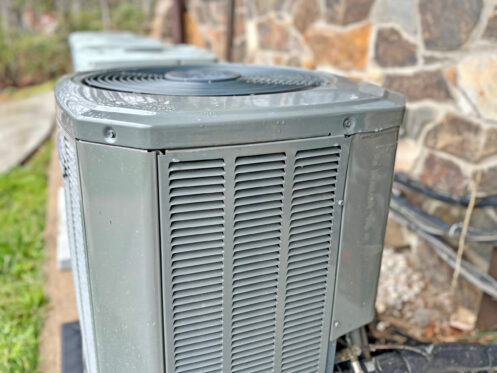
Replacing your home air conditioning system is a major investment for your family. It can be helpful to understand the driving factors behind the exact price of replacing your unit. This will allow you to make smarter purchasing decisions that fit well within your budget.
Type of System
One of the biggest driving factors behind the price of a new air conditioning system for your home is the type of system that you get. You have three main options to choose from, which are central ACs, heat pumps, and ductless mini-split systems. If you have existing ductwork in your home, putting in a central air conditioner or a heat pump is typically the most cost-effective option.
However, if you don’t have existing ductwork in your home, a ductless mini-split system can be more cost-effective to install. It’s important to note that both ductless mini-split systems and heat pumps are more expensive than central air conditioning systems. This simply comes down to the fact that they provide both heating and cooling in one unit compared to just cooling with the central AC unit.
Cooling Capacity
Another significant impact on pricing is a system’s cooling capacity. The higher a system’s cooling capacity, the more cold air it can produce for your home. You need an air conditioning system that’s appropriately sized for your space. If you get a system that’s too small, it won’t be able to keep your home comfortably cool.
However, if you get a system that’s too large, it won’t run long enough to remove humidity. This will leave you with an uncomfortable home environment and will cost more than necessary to purchase upfront. Realize that units with a higher cooling capacity cost more to purchase than units with lower cooling capacities.
Efficiency Rating
All home air conditioning systems have a seasonal energy efficiency ratio known as SEER2 for short. This describes the overall operating efficiency of the individual air conditioning system. The higher a system’s rating, the more efficient it will be, which translates to lower operating costs for you. In general, units with SEER2 between 14 and 16 are considered standard, while those between 17 and 20 fall into the mid-range category.
Units with a SEER2 rating of 21 or more are considered high-efficiency systems that come at a premium price. It’s important to consider the upfront cost of purchasing your new air conditioner and the long-term energy savings it can bring you.
Installation Complexity
One other factor that will have a large influence on your new unit cost is its installation complexity. If your system is located in a hard-to-reach area or up on a second story, it can require more labor to install. The more time it takes to remove your old unit and install your system, the more expensive your new system will be.
If you have an outdated system that uses older refrigerant, you’ll need to upgrade your refrigerant lines when purchasing a new system. Replacing your refrigerant lines comes at a higher cost than simply reusing the existing ones. If you have an outdated electrical system, you may need to upgrade it to accommodate newer air conditioning systems. This will increase the upfront installation cost of your new air conditioning unit.
Ducting Modifications
While you might not give it much thought, your ductwork can have a big impact on the overall cost of your AC replacement service. For your new air conditioner to operate at its peak capacity, you need to have well-functioning ductwork. If your existing ductwork is leaky, poorly sized, or obstructed, it will require repairs or modifications before your new system can go in. The more modifications that your ductwork needs, the higher your installation cost will be.
Thermostat Upgrade
It’s fairly common to upgrade your thermostat every time you upgrade your existing HVAC system. A new thermostat will add to the purchase price of your AC replacement service. Programmable thermostats are the least expensive, while smart thermostats and zone thermostats are the most expensive. However, realize that both smart and zone thermostats can make your system more efficient, leading to long-term energy savings.
Brand and Equipment Quality
As with purchasing any new appliance for your home, there are many different brands for you to choose from. Some brands offer higher-quality materials with longer warranties compared to others. Some of the industry’s leading brands will offer better reliability, more features, and higher prices.
Permitting
The specific municipality that you live in will determine whether or not you need to obtain a permit or get an inspection for your AC system replacement. Some municipalities do require homeowners to get a permit when they’re installing a new air conditioning system. Your HVAC contractor will typically take care of obtaining the permit and will add the cost of the permit to your overall AC replacement cost.
Extended Warranties and Replacement Plans
It’s fairly common for most HVAC installers to offer maintenance plans and extended warranty coverage. These aren’t a necessary requirement when purchasing a new air conditioning system for your home. However, they tend to come at a prorated price when you’re putting in a new air conditioner. This can make it more feasible to add on that maintenance plan to ensure your unit gets routine maintenance.
You may also want to consider adding that extended warranty so that you’re not stuck paying out of pocket in the future for any defective components. Paying for either an extended warranty or maintenance plan can increase the overall cost of your installation service.
Tips on Minimizing AC Replacement Costs
With home air conditioning systems coming at a premium price, it’s common to wonder if there’s anything you can do to minimize those costs. Fortunately, there are numerous steps you can take to decrease the upfront purchase price or get some of your money back. One of the most important things you can do is schedule your AC replacement at the right time.
In the early spring, many AC manufacturers offer promotional discounts to consumers who are looking for a new AC unit. This is the best time of year to take advantage of these promotions to reduce the upfront cost of your new system. Additionally, you can avoid higher labor costs that tend to take over as the busy season starts in the summer.
The federal government currently offers a tax credit to homeowners who invest in energy-efficient AC systems. If you purchase a qualifying unit, you can claim up to $3,200 per year in the form of a tax credit. This is under the Inflation Reduction Act of 2022 and lets you recoup some of your upfront purchase price. You also may find that your local utility company will provide you with a one-time credit on your energy bill when you show proof of a system purchase. Some municipalities may even offer you a tax reduction, depending on where you live.
Choosing strategic financing to purchase your air conditioning system can make a difference when it comes to the overall price you pay for your unit. You may also find that going the financing route allows you to purchase a high-efficiency system that lowers your energy bills over the long term.
Exceptional AC Replacement Services
Scott-Lee Heating Company provides exceptional AC replacement services in St. Louis and the surrounding areas. We can also assist with all of your new AC installation, repair, and tune-up needs. Simply contact our office today to learn more and to schedule your initial consultation.